Bloom Nutrition Marketing Strategy: A Pop-Up Teardown
A teardown of Bloom Nutrition's marketing strategy through one 2023 pop-up recap: why the event works as content, and the edit I would make.

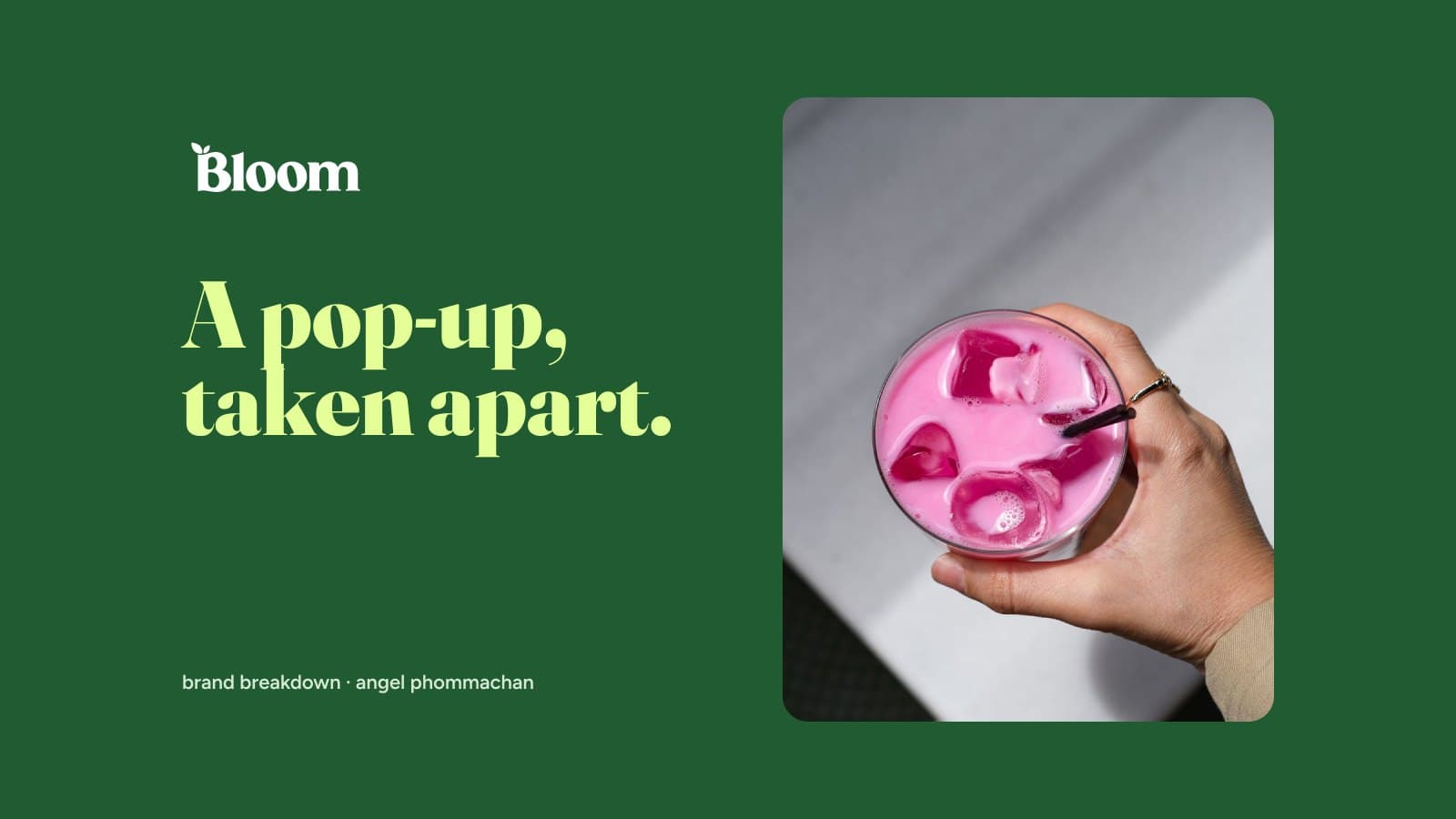
Bloom Nutrition's marketing strategy runs on community: build a moment people want to film, then hand the footage back to them as content. Its 17-second recap of a September 2023 NYC market pop-up shows the playbook in one clip, but it saves the community for the last few seconds. That is the edit I would change. If you plan pop-ups or cut event recaps, this is the teardown for you.
What is Bloom Nutrition's marketing strategy?
Bloom Nutrition's marketing strategy started with one creator's audience. Co-founder Mari Llewellyn built a following by posting her own health journey, and those followers became Bloom's first buyers. "The community that I had built and gained trust with on my platform were all of our customers," she told Modern Retail in April 2023. Graza's creator seeding reached its first buyers another way: free oil with no required posts.
That audience was large on its own. Modern Retail counted more than 1.6 million Instagram followers, 245,000 on TikTok, and 200,000 on YouTube for Llewellyn alone. By then, Bloom shipped over 100,000 orders a month and had tripled its revenue in 2022.
Bloom turned that community into its retail pitch, and TikTok was the proof. "When it comes to retailers, they know that this social media movement is happening and they know that TikTok's important," Llewellyn said in the same interview.
Bloom landed Target in October 2022 and announced Walmart four months later, Modern Retail reported. By April 2023, its products sat in around 6,000 doors.
The strategy is a loop. Social builds the community, the community proves demand, and retail puts the product where that community already shops. Pop-ups are where the loop goes offline.
What happened at Bloom's NYC market pop-up?
Bloom posted this TikTok from its @bloom account on September 9, 2023. The caption calls it a wrap on "our market pop-up this weekend in NYC" and thanks "our community for showing up and showing out."
The clip runs in five beats, each with a text overlay. It opens on a green storefront and a sign for the "Bloom Market Pop-Up" with the line "find your flavor."
Next, a guest pulls a tub off a wall of Greens canisters stacked like produce. The third beat is a crate of oranges and limes with Bloom stickers. The fourth is a green shopping basket with the logo on it. The last beat shows two guests holding drinks, over the line "And our community ofc."
I checked the public counts on October 4, 2026.
Why does Bloom's pop-up recap work?
The set is the content. Bloom built a corner market where a greens powder sat on shelves like fruit. "Find your flavor" turns a supplement into something you browse.
Every beat is a shot a guest could take on their own phone. The Greens wall is a backdrop. The branded basket is a prop. Bloom designed the room so the people in it would make the ad.
That bet has data behind it. EventTrack 2026, Event Marketer's survey of attendees and marketers fielded in summer 2025, found 59 percent of attendees capture content at live experiences. In the same study, 82 percent of attendees said they told friends and family about the brand they met there.
The thank-you framing does the rest. For people who came, the recap is a keepsake. For people who did not, it is proof they missed something. Saves outnumber comments 68 to 11, which suggests viewers filed it away for later.
How does Bloom turn events into content?
Bloom still plans events that double as content. In April 2026, it wrapped a 7-Eleven near Palm Springs in pink for Coachella weekend, with DJs, samples, and an airbrush merch station. The takeover also promoted the nationwide 7-Eleven launch of Bloom's energy drinks. CEO Greg LaVecchia explained the approval test to Modern Retail.
"If it makes sense on a digital activation level as well as an in-real-life activation level, then it's pretty easy for me to give the stamp of approval," he said. He also said the team is not "reverse engineering the whole program for how many impressions we're going to get at what cost."
That is the mechanic. The event is the shoot, and the recap is the distribution. Neither half has to justify itself alone.
What I would change in the recap
I would lead with the people. The caption thanks the community, but the edit shows the set for four beats and the crowd for one. Open on faces, and the recap reads as a party. Open on shelves, and it reads as a store tour.
I would split-test it, the way I split-tested two YouTube thumbnails at Yoodlize and let click-through pick the winner. There, a party-first thumbnail ran against an app-first one. Here, that means two cuts: one people-first and one set-first.
I would give the viewer a next step. The recap ends with nowhere to go, and the post has 11 comments. A prompt like "tag yourself if you came" turns attendees into commenters and gives Bloom their handles.
Bloom made that fix itself two years later. At its Treat Shoppe on Lafayette Street in New York on September 20, 2025, Bloom launched an on-site sign-up for its community on TYB. TYB, the community platform Bloom uses, reports in its own case study that more than 250 people RSVP'd and 5,500 joined in the first month.
Jillian Reulein, Bloom's head of social and content, described the goal as a way to "turn an in-person moment into an ongoing relationship," per the TYB case study. That is the line the 2023 recap was missing.
A pop-up is a moment people show up for. The recap decides whether they come back.
A pop-up checklist from Bloom's playbook
- Build the set as a backdrop. Every corner should be a shot a guest would take on their own phone.
- Hand out one branded prop. Bloom's green basket carried the logo into the shot.
- Cut the recap people-first. Put the guests on camera before the product. For more activations built around the crowd, see the best brand activations of 2026.
- Collect handles before people leave. A tag prompt or an on-site sign-up, like Bloom's 2025 TYB launch, turns a visit into a relationship.
Which brand event recap made you wish you had been there? Send it my way, or see how I built a campaign from scratch in the Thai restaurant Google Ads case.