Ghia Marketing Strategy: Selling the Hour Before Dinner
Ghia marketing strategy explained: why a non-alcoholic aperitif targets drinkers, spends on restaurants, and sells a ritual. What I'd change.

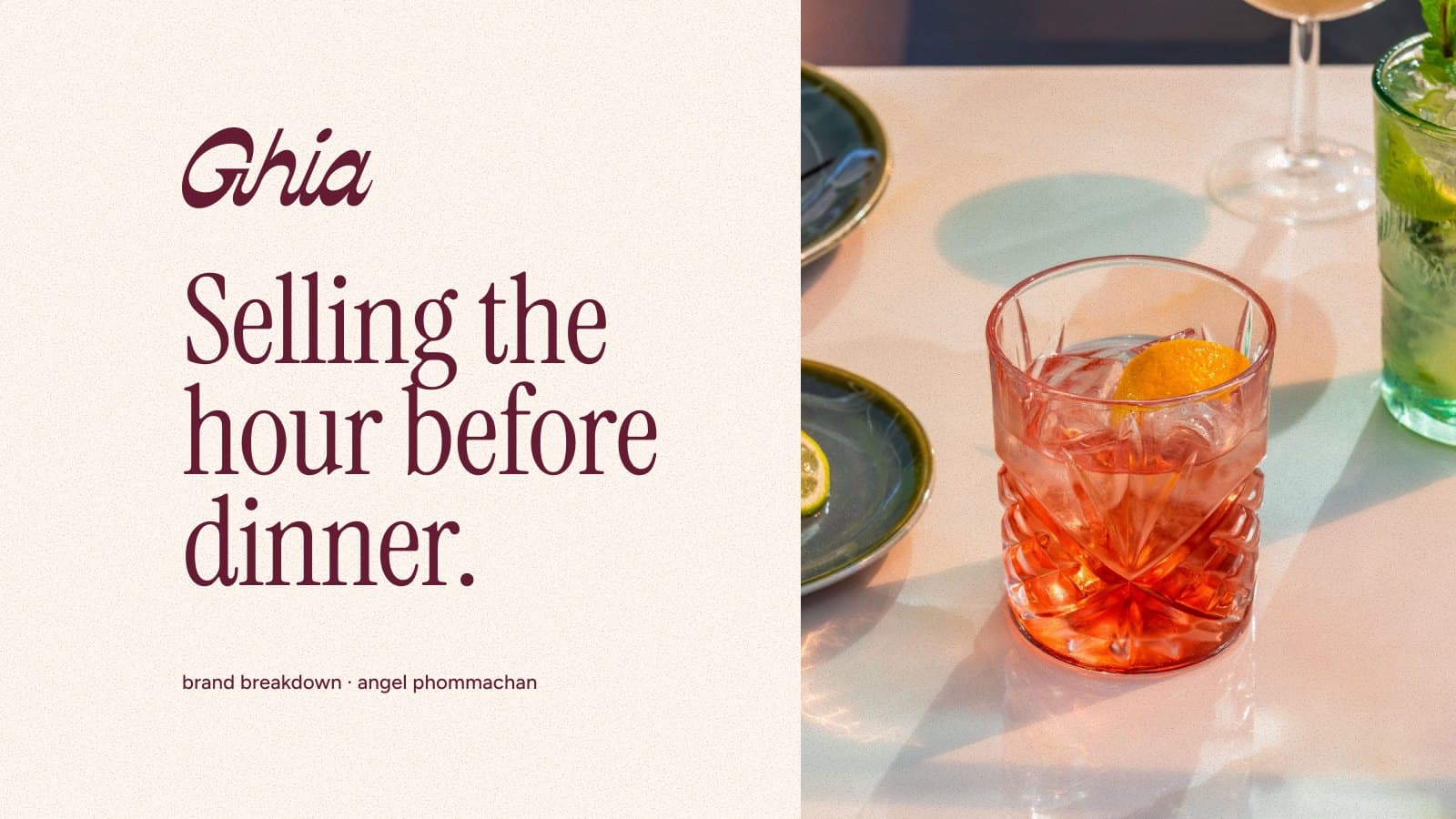
Ghia's marketing strategy sells the hour before dinner, not a drink. Founder Melanie Masarin told Hannah's List in August 2026 that about 92 percent of Ghia's buyers drink. Ghia also spent heavily on restaurants that barely paid. If you market a product people file under a niche, it is the playbook to study.
Ghia's own post from January 2026 welcomes anyone "new here."
Masarin explained that 92 percent in the same Hannah's List interview. "Positioning Ghia against alcohol would have alienated most of the people we made it for," she said.
What is Ghia's marketing strategy for a non-alcoholic drink?
Ghia markets an occasion. Sober-curious framing sorts people into two rooms. An occasion has no membership requirement. Ghia's own shop sells the objects for that hour: Totem glasses, an ice bucket, and a cocktail box. In 2026, Masarin published Riviera, a cookbook built on her grandmother's recipes from the South of France, per Hannah's List.
The price fits a ritual, too. A bottle cost $38 in 2023, per Shopify. Masarin told Shopify its ingredients cost six to 10 times more than those in a comparable alcoholic drink.
What I would change: the Ghia homepage still reads "It's not a mocktail, it's Ghia," as of October 2026. That line argues with a category. It fails a simple test: what would this brand never say? I would drop the comparison, because the strongest version of this brand never mentions what it is not.
Why did Ghia spend on restaurants that barely paid?
Ghia planned to launch in restaurants on April 1, 2020, Masarin told Hannah's List, but COVID closed them. In a January 2022 Modern Retail interview, she said 75 percent of the business was still online. Even so, Ghia put about 30 to 40 percent of its marketing resources into chefs, sampling, and tastings, for about 4 percent of revenue.
The restaurant spend was a memory channel. Masarin told Hannah's List that venues build affinity and discovery, even with a lower return than direct sales. By September 2025, a Ghia press release counted more than 4,000 retailers and 1,200 bars and restaurants.
Ghia's own post from September 2026 asks, "Who says you can't color hunt at Whole Foods?"
What I would change: the reporting, because a channel defended on second-order value needs a second-order number. Athletic Brewing's 2026 Athletic January paired an OpenTable map of bars serving it with a $5 rebate on a pour, Beverage Industry reported. A redeemed rebate is a trial you can count. I would track the share of new customers who buy again within 90 days, split by whether they met Ghia in a restaurant or on a shelf.
What happened to Ghia after Shark Tank?
Masarin asked for $250,000 for 5 percent in Season 14 of Shark Tank and left without a deal, per a 2026 Takeout recap. Ghia went on to Whole Foods, Wegmans, and Target, The Takeout reported. Masarin told Hannah's List that Ghia has since made profitability the goal. "Most of my job now is saying no to protect the business," she said.
What to steal from Ghia's marketing strategy
- Sell the occasion, not the category. Name the hour your product belongs to, then sell what fills it. Ghia sells glasses, an ice bucket, and a cookbook.
- Market to the buyers you have. About 92 percent of Ghia's buyers drink, so Ghia never asks them to quit. Check who buys before you pick an enemy.
- Fund one channel for memory, and give it its own number. Restaurants returned about 4 percent of revenue. Measure repeat purchases by where a customer first met you.
- Give the price a reason. Ghia's ingredients cost six to 10 times more than a comparable alcoholic drink's, Masarin told Shopify. A ritual can carry a premium when the reason is plain.
Graza had the same instinct in olive oil, and Fishwife had it in tinned fish: build the brand before you chase scale.
Which brand owns a time of day in your house?