Fishwife Marketing Strategy: Collabs Are the Media Plan
Fishwife marketing strategy, explained: the tin won the first look, but a calendar of collabs with Sweetgreen, Chaco, and Whole Foods kept it growing.
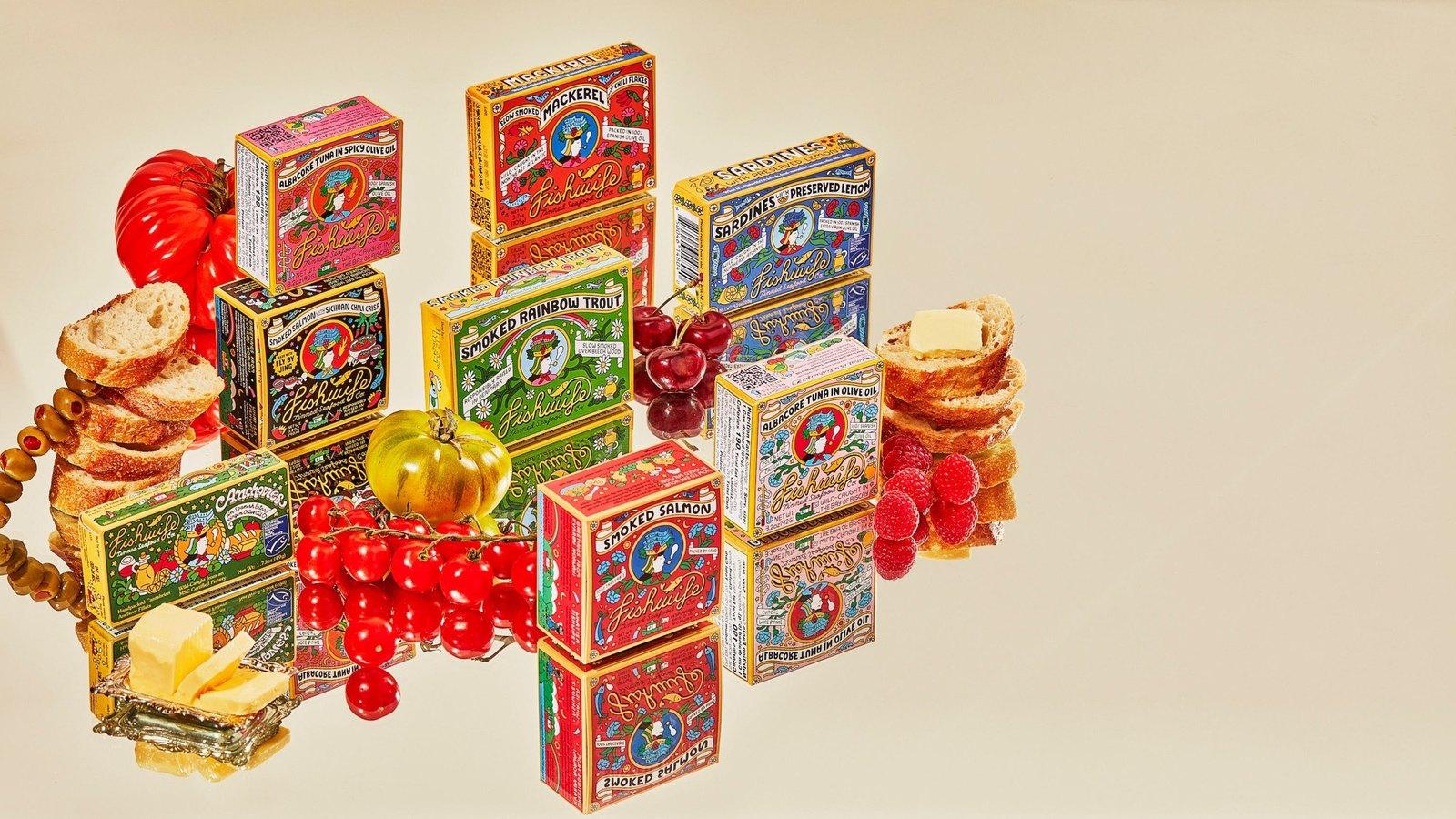
Fishwife went from a December 2020 launch to about 5,000 stores in four years, and as of April 2022 its founder said it hadn't spent anything on paid marketing. Most breakdowns of Fishwife's marketing strategy credit the illustrated tins. The tin did win the first look, but what kept the brand growing is a steady calendar of collaborations that does the job a media budget does at most brands, and that is the part a small brand can plan for.
The short version
- The tin came before the fish. Fishwife built its brand identity before it filled a sample box, so every photo of a tin works as advertising it didn't pay for.
- "No paid ads" was a 2022 snapshot. A co-founder's following and steady influencer gifting powered it, and the founder said at the time it wouldn't last.
- Collaborations do the reaching now. Fishwife runs several a month, and the tin itself has become the collab format.
- The catch: partners said yes because Fishwife already had attention. A collab calendar is something you earn, not where you start.
| Detail | Source | |
|---|---|---|
| Launched | December 2020 | Inside Retail, Jan 2025 |
| Founders | Becca Millstein and Caroline Goldfarb. Goldfarb has since left the brand. | Food Dive, Sept 2024 |
| Paid marketing | None as of April 2022 | Marketing Brew, Apr 2022 |
| Shark Tank | $350,000 from Lori Greiner and Candace Nelson for 6 percent plus advisory shares | Tasting Table, Jan 2024 |
| Stores, April 2024 | 1,800 retail locations | Fortune, Apr 2024 |
| Stores, January 2025 | 5,000 brick-and-mortar retailers | Inside Retail, Jan 2025 |
| Costco | National rollout in early 2026 | Sporked, Jan 2026 |
What gap did Fishwife's founder see in tinned fish?
The idea started in 2015, when Becca Millstein was living in Spain and fell for the culture around Spanish and Portuguese conservas, Fishwife's Our Story page says. She believed there was room for tinned fish of that quality in the United States, and in 2020 she started Fishwife with Caroline Goldfarb. The stated mission is to make premium, sustainably sourced tinned seafood "a staple in every cupboard."
The category she walked into was barely growing. Millstein said conventional tinned fish grew just 1 percent from 2022 to 2023, in Fishwife's April 2024 Whole Foods announcement covered by The Metal Packager. Premium tinned fish existed, but it came from European brands, which is what Millstein had been buying herself, Food Dive reported. The opening was in how American tinned fish looked and felt: backup food in the pantry, not something you'd set out for guests.
Why did Fishwife design the tin before sourcing the fish?
Fishwife built the look first and filled the tin second. Millstein told Food Dive in September 2024 that she had already hired illustrator Danny Miller and "created the initial brand identity" before the first sample box was filled. Food Dive credited the "distinctive, vibrant and colorful tins" with setting Fishwife apart from the European brands on the same shelf.
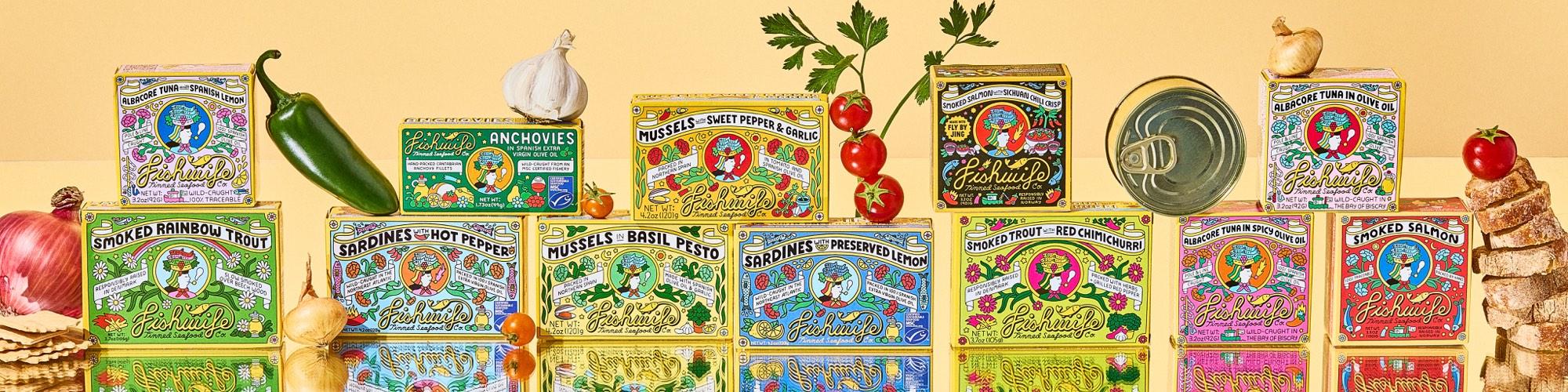
The order makes sense once you think about where tinned fish gets eaten: on a table, with a phone nearby. A tin that looks good gets photographed, and every photo carries the brand to someone new. "We built Fishwife on Instagram," Millstein told Help Scout in September 2023, and the design is what made that possible. Graza made the same bet with a squeeze bottle, which I cover in the Graza breakdown.
The look has stayed consistent for six years. Sweetgreen's August 2026 release credits Miller with the artwork on its co-branded tin, so the same hand still draws the brand. Fishwife's TikTok from June 2024 opens with "HI WE'RE FISHWIFE," tagged #tinnedfish and #tinnedfishtok, the communities where the brand wanted to be found.
Steal this: if your product ends up on a table, desk, or counter, design it for the photo before you spend on reach.
The name and the sourcing do quieter work
The name carries the brand's attitude. "Fishwife" was once a gendered insult aimed at the wives and daughters of 16th-century fishermen, Secret NYC reported in October 2024, and the female-founded brand reclaimed it for every tin. The product names stay literal, so Smoked Rainbow Trout with Red Chimichurri tells you exactly what's inside. The wit lives in the brand name and the clarity lives on the label.
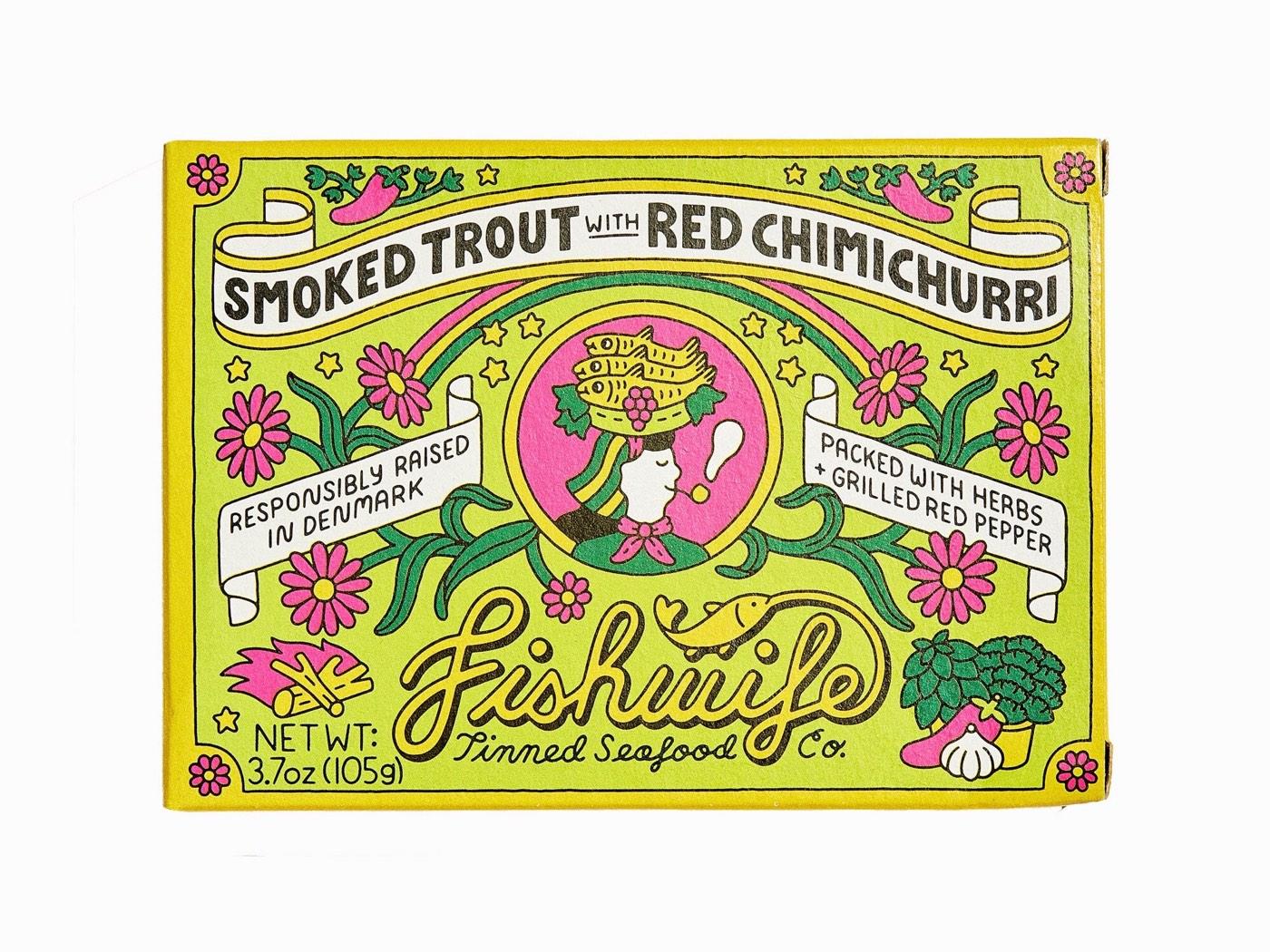
Sourcing gets a lighter touch than you might expect from a seafood brand. The Our Story page says the fish comes from Marine Stewardship Council or Aquaculture Stewardship Council certified fisheries and names six canneries across Washington State, Spain, Denmark, and Scotland. But Millstein told Marketing Brew in April 2022 that responsible sourcing was "table stakes these days," and that the main branding strategy was "messaging deliciousness, humor, exuberance, artfulness."
That's a useful split for any brand. When every competitor makes the same claim, it belongs in your proof points, where a careful shopper will find it, not in your headline.
Did Fishwife really grow without paid ads?
At first, yes, and it's the most misread part of the story. Marketing Brew reported in April 2022 that Fishwife had "not done any paid marketing," and that line gets repeated as proof that great packaging is enough.
The same article explains what was actually driving it. Millstein credited co-founder Caroline Goldfarb, whose followers "helped things move really, really fast," and the brand was sending product to influencers and micro-influencers and hoping they would post. The organic reach had an engine behind it, an audience that existed on day one plus steady gifting, and Millstein said in that interview that it was "not gonna last forever."
While it lasted, the engine was strong. Millstein told Help Scout in 2023 that 40 percent of customers discover Fishwife through social media. The #tinnedfishdatenight hashtag had 7.4 million TikTok views by September 2022, Bustle reported, with Fishwife among the brands it named, and the brand's May 2023 TikTok opens with "welcome to tinned fish tok."
The revenue Millstein disclosed on Shark Tank shows how fast that period moved. She left with $350,000 from Lori Greiner and Candace Nelson after countering their 10 percent offer with 6 percent plus advisory shares, Tasting Table reported in January 2024.
The takeaway is narrower than "skip ads." Zero paid marketing worked for a brand that launched with a built-in audience and a gifting habit. If you launch without a co-founder's following, budget for gifting or paid reach from the start. For a contrast, Duolingo built its reach on one consistent social voice, which I cover in the Duolingo breakdown.
Why collaborations drive Fishwife's marketing strategy
Millstein signaled early that big ad budgets weren't the plan. She told Marketing Brew in April 2022 she was "much less interested in just shoveling $10,000 into Facebook ads." By January 2025, she told Inside Retail that Fishwife runs collaborations "several a month" across food, fashion, and jewelry.
That calendar is Fishwife's media plan. Each partner brings its own audience and puts the tin somewhere new: a chili crisp fan's pantry, a sandal display, a salad bowl. And because the collabs are physical things people can hold, they get posted the same way the tins do, so each one keeps reaching people after launch day.
| Date | Partner | What it was |
|---|---|---|
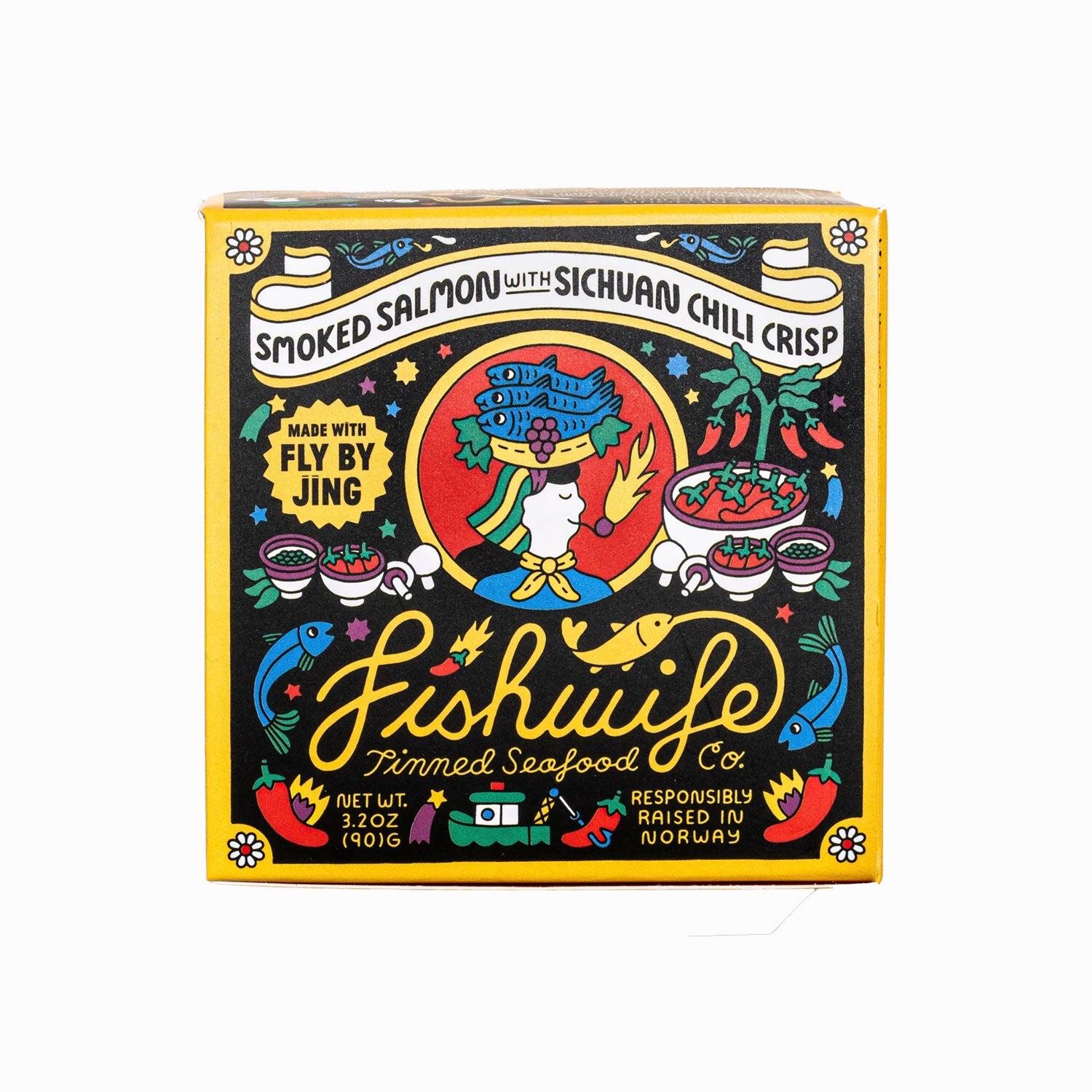
| March 2022 | Fly By Jing | Smoked salmon with Fly By Jing's Sichuan chili crisp (Tasting Table) |
| May 2025 | Chaco | A Fishwife version of the Chaco Z/1 sandal, sold on both brands' sites (Chaco release) |
| July 2026 | Whole Foods | Fishwife x Whole Foods tote bags (SeafoodSource) |
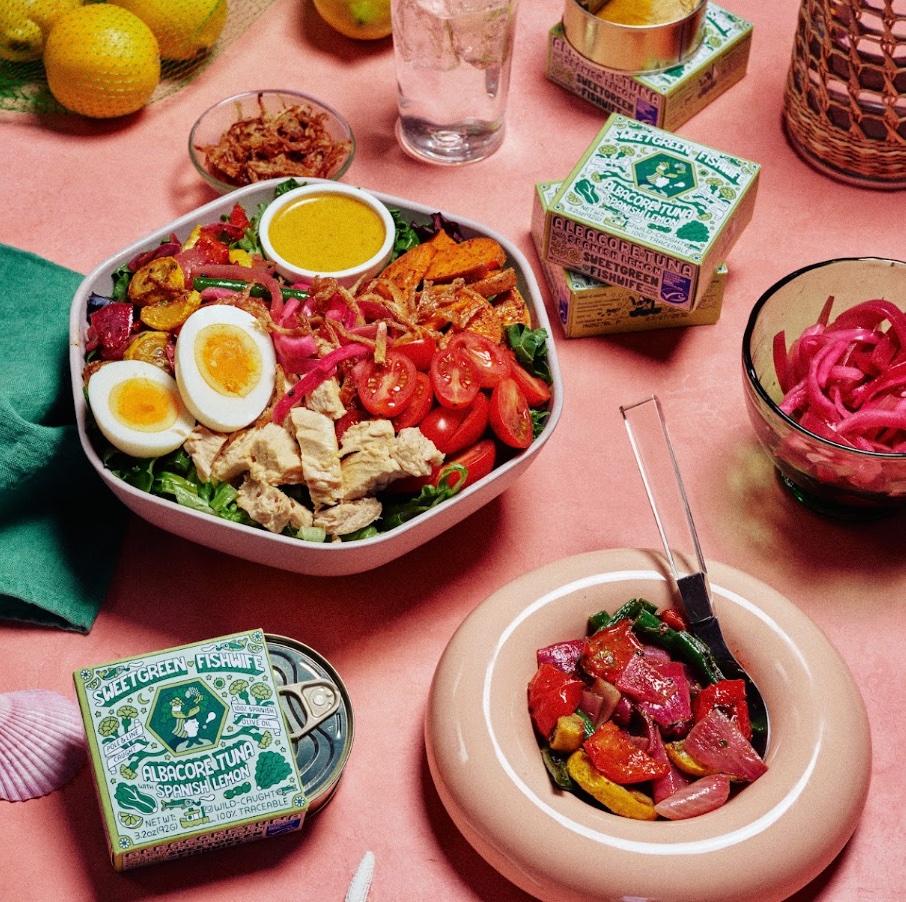
| August 2026 | Sweetgreen | A Summer Niçoise with a co-branded tin of Fishwife albacore tuna, August 11 to 24 (Sweetgreen release) |
The Fly By Jing tin shows how a limited collab can become a lasting product. It launched in March 2022, Fishwife's product page now calls it a "best-selling smash collaboration," and the partnership has added a second flavor, Smoked Salmon with Sweet & Spicy Zhong, built on another Fly By Jing sauce.
The Sweetgreen collab made the tin part of the meal. Sweetgreen's August 2026 release says the Summer Niçoise came with a custom co-branded tin of Fishwife Albacore Tuna with Spanish Lemon for guests to open themselves, and that it was Fishwife's first appearance on a national restaurant menu. That put the brand in front of salad-chain customers who may never walk down the tinned fish aisle, and Fishwife's recipe page later noted that the collaboration sold out.
The newest collabs take the tin into categories with nothing to do with fish. Fishwife's shop lists Dieux x Fishwife eye masks packed in collectible tins with Miller's artwork, and a Bag Balm x Fishwife moisturizer in a sardine-style tin, sold only in the brand's 12 Days of Fishwife advent calendar. The package that won the first look is now what partners want to borrow.
If you plan collaborations this way, treat them as a calendar with a reach goal for each one, not as one-off favors.
Retail followed the attention
Stores came after the audience. Fishwife announced a national expansion into select Whole Foods stores in April 2024, with two exclusive albacore tuna products, after conversations that began in 2021, The Metal Packager reported. In the same announcement, Millstein said the business grew nearly 180 percent year over year, against 1 percent for the conventional category. Fishwife was in 1,800 retail locations that month, per Fortune, and in 5,000 brick-and-mortar retailers by January 2025, per Inside Retail.
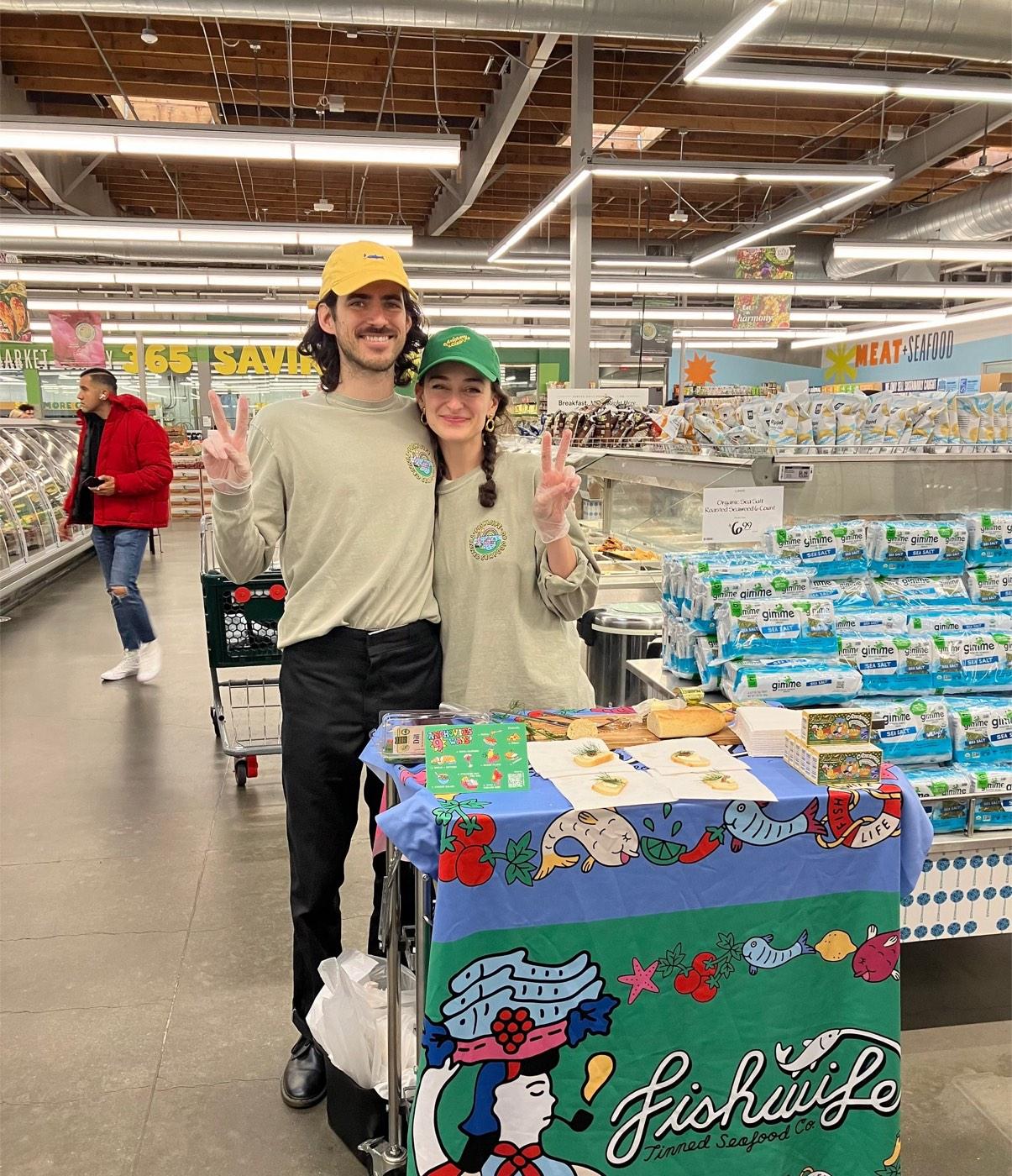
In January 2026, Sporked reported a national Costco rollout with a 3-pack of Albacore in Spicy Olive Oil at about $15, while 3-packs on Fishwife's own site go for over $30. A brand that grew on giftable, premium tins now also sells warehouse packs at about half its online price, which points to a push for shoppers who never saw the TikToks.
What to take from Fishwife
- Design for the photo before you buy reach. Fishwife hired its illustrator before it filled a sample box, and the tin has worked as its launch ad ever since.
- Count the audience you start with. "No paid ads" worked because a co-founder's following and steady gifting were already in place. Without that, budget for reach from day one.
- Keep the label plain. Literal product names keep shoppers oriented, so the personality can live in the brand name and the art.
- Run collaborations as a calendar. Several a month, each in a new category, each with a partner who brings an audience you don't have yet.
- Make your package the collab. The Sweetgreen tin, the Dieux eye masks, and the Bag Balm tin all borrow Fishwife's format, so the brand shows up even when the product isn't fish.
The catch: you have to earn the collab calendar
Lining up partners looks like a play any small brand could run. The timeline says otherwise: every big collab arrived after Fishwife already had attention. The Fly By Jing tin launched in March 2022, the same spring Marketing Brew described growth powered by Goldfarb's following. Sweetgreen came in 2026, after the brand passed 5,000 stores, and its co-founder Nicolas Jammet said in the release that "Fishwife has built an exciting brand around exceptional tinned seafood, bold flavor and thoughtful sourcing." Partners were buying into a brand that already had a look and a crowd.
The Costco move adds a second tension. Collabs keep a brand feeling special, and warehouse packs at half the online price pull the other way. The open question for 2027 is whether the collab calendar can protect Fishwife's premium feel while Costco brings in volume.
For a small brand, the order matters more than the tactic. At Green House, the clients I work with are small and mid-size local businesses, and the version I'd test with them is small: pick two nearby brands whose customers look like yours, make one limited product or event together, and track how many new followers or email sign-ups each partner sends your way. If one collab brings in more new people than a month of regular posting, that's the first entry on your calendar.

Written by Angel Phommachan, digital marketing specialist