Liquid Death vs. Poppi: Marketing a Fact vs. a Promise
Liquid Death vs. Poppi: one sold a gut health promise, the other sold attitude and label facts. How each brand marketed itself, and which held up.
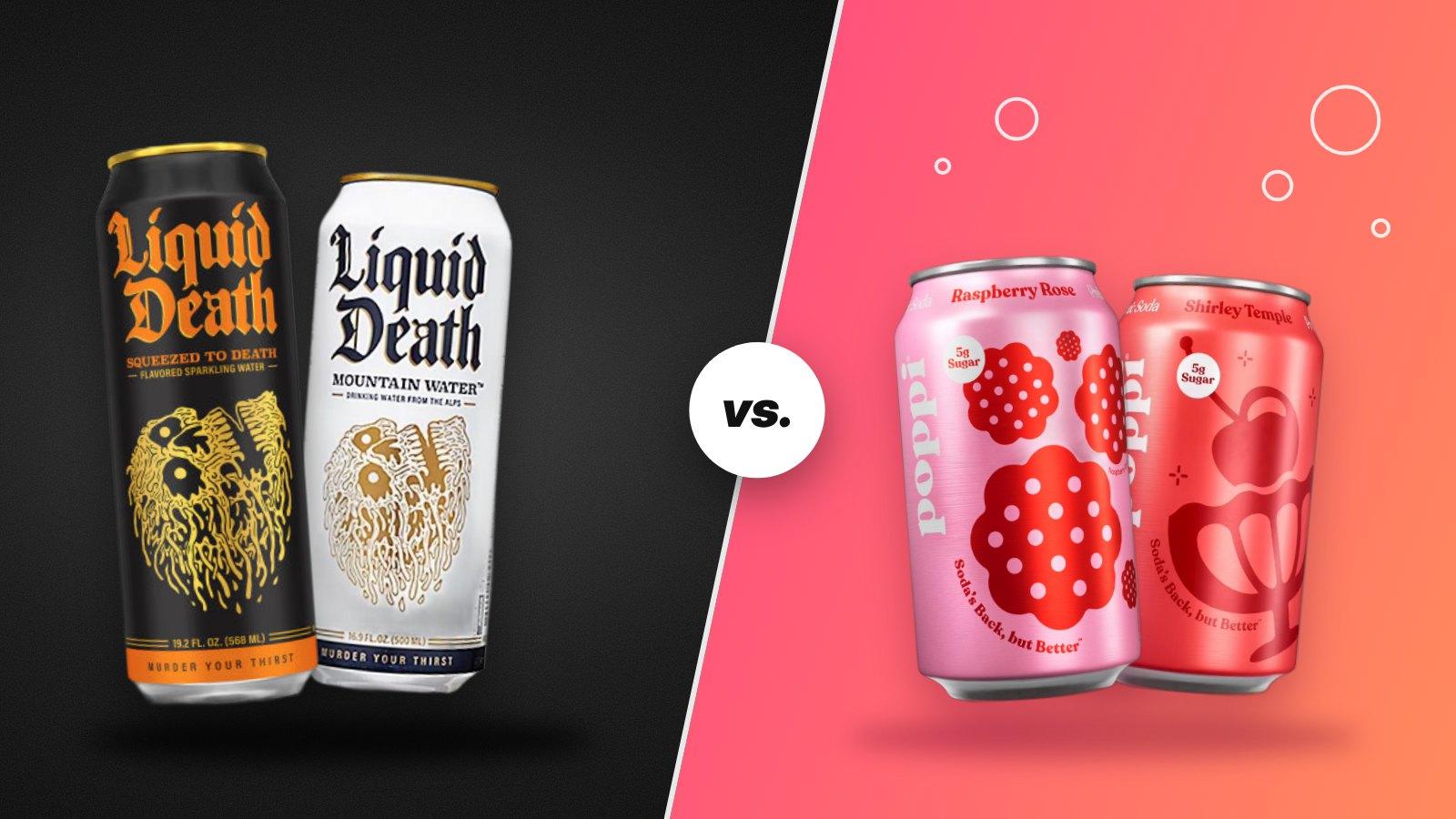
In May 2025, Liquid Death sat people on toilets in a bright white studio and had them taste its 10-calorie sparkling water against a high-fiber prebiotic soda, the kind Poppi made famous. That ad is the quickest way into Liquid Death vs. Poppi, because it shows what each brand asks you to believe. Poppi sold a gut health promise you had to take on trust, while Liquid Death sold attitude plus numbers you can check on the label. The promise grew faster, but the facts have aged better, and Poppi's own recent marketing shows it.
The short version
- Poppi built a $1.95 billion brand on soda that was better for your gut, then paid $8.9 million to settle a lawsuit over that claim.
- Liquid Death never said its water does anything special. Its claims are numbers like calories and sugar, and its edge is a voice a rival can't copy.
- In 2026, Poppi is selling mood, sports, and culture, which is closer to Liquid Death's playbook than to its own origin story.
- The catch: when Liquid Death moved into energy drinks, it started printing benefits too, so the real lesson is about when a promise stops working.
The toilet ad that put Liquid Death and Poppi on the same shelf
Liquid Death called the spot a toilet blind taste test, and its tagline was "More Pop. Less Poop," DesignRush reported in May 2025. Liquid Death's VP of creative, Andy Pearson, said its 10-calorie sparkling waters hold up against sodas with more calories, according to the outlet. The ad never named Poppi, and it didn't need to, because anyone who had walked down a soda aisle that year knew who it meant.
The timing explains the jab. Liquid Death had announced soda flavors like Killer Cola in January 2025, which moved it onto the same shelf as the prebiotic brands, Modern Retail reported that March. In May, PepsiCo closed its $1.95 billion purchase of Poppi, according to PepsiCo. Two brands that started in different aisles were now asking the same shopper for the same dollar, and each was selling something very different to get it.
Poppi's marketing strategy sold a gut health promise
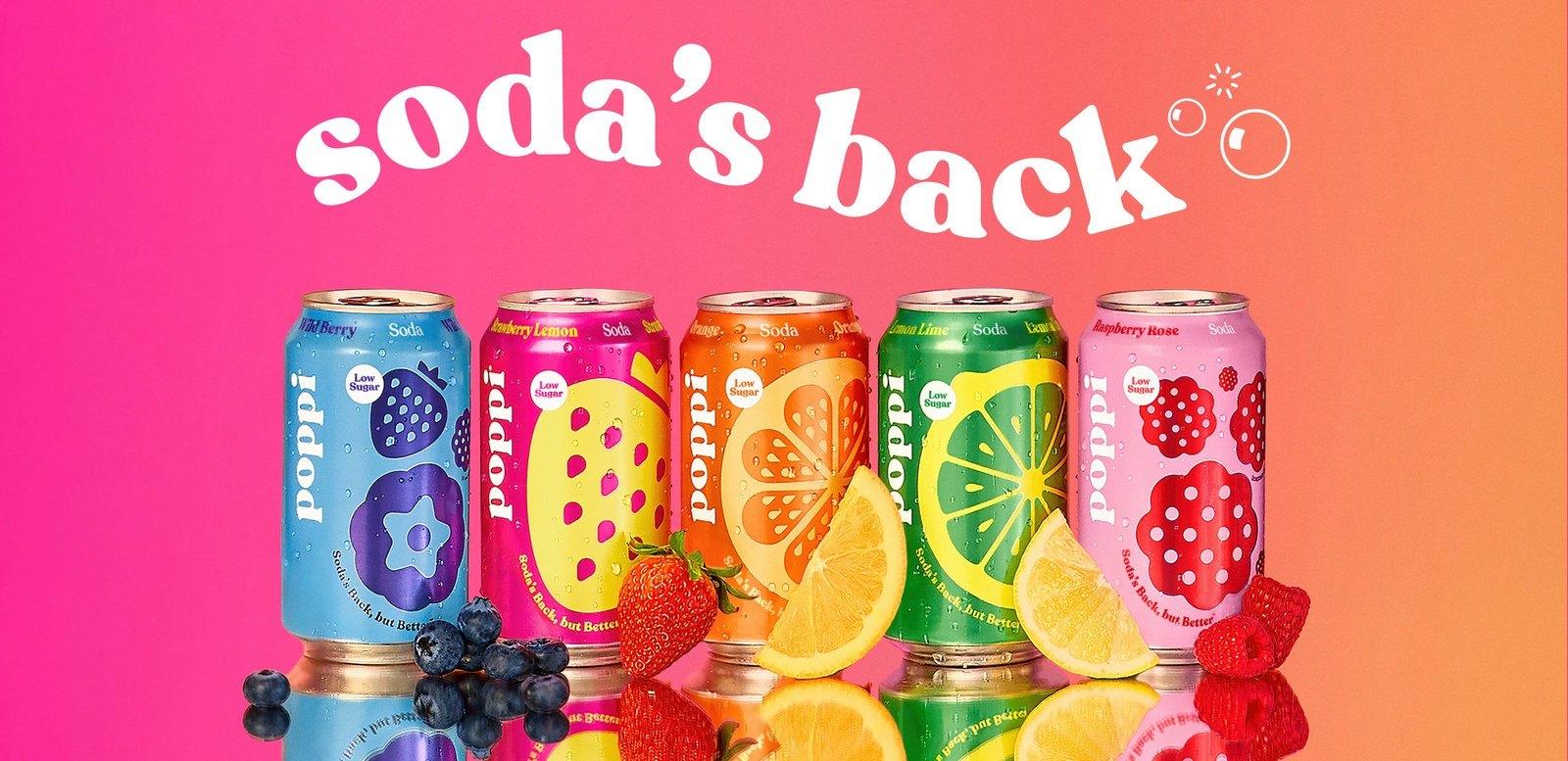
Poppi's pitch is that soda can feel good again. Its website still leads with "soda's back, but better," and PepsiCo says each serving has no more than five grams of sugar. The early marketing went further than lower sugar, though. Slogans like "gut health never tasted this good" and "for a healthy gut" told shoppers the drink would do something for their bodies, Brewbound reported in March 2025.
The founder carried that promise to its first big audience. In 2021, co-founder Allison Ellsworth posted a TikTok telling the brand's story, went to bed, and woke up to more than $100,000 in Amazon sales, she told Tasting Table in 2025. Founder video works because the person making the promise is a person you can see, which is the same reason Bloom Nutrition's first buyers came from its co-founder's own following.
What customers bought was permission to drink soda without the guilt. That permission was a strong reason to try the can, but it rested on a health benefit the brand would have to keep proving.
Why was Poppi sued over its gut health claims?
In May 2024, customers filed a class action arguing that the agave inulin in each can was far too little fiber to have a meaningful effect on the gut. In March 2025, the plaintiffs asked a federal judge in California to approve an $8.9 million settlement, and Poppi said it acknowledged "no fault, liability, or wrongdoing," Brewbound reported. The settlement ended the case, but it also put the brand's core promise on the record as something customers had challenged.
The lawsuit was only half the problem, because an ingredient is easy to copy. Coca-Cola announced Simply Pop with 6 grams of prebiotic fiber per can in February 2025, TODAY reported. In July 2025, PepsiCo, Poppi's new owner, announced Pepsi Prebiotic Cola with three grams of prebiotic fiber per can, BevNET reported. Once your own parent company sells a cola with your main ingredient, that ingredient no longer sets you apart.
So the gut health promise was exposed from two sides at once. Customers could question whether it worked, and rivals could put the same fiber in their own cans, which means a brand built on that benefit has to defend it in court and on the shelf.
Liquid Death's marketing strategy let the can do the talking
Liquid Death started from the opposite end. Beer had all the cool packaging and water had none, so founder Mike Cessario put water in a tallboy can that looks like beer. "There's no reason that only beer can have that kind of cool look and feel," he told Fortune in 2024. "We needed to bake all the marketing and shareability into the product itself."
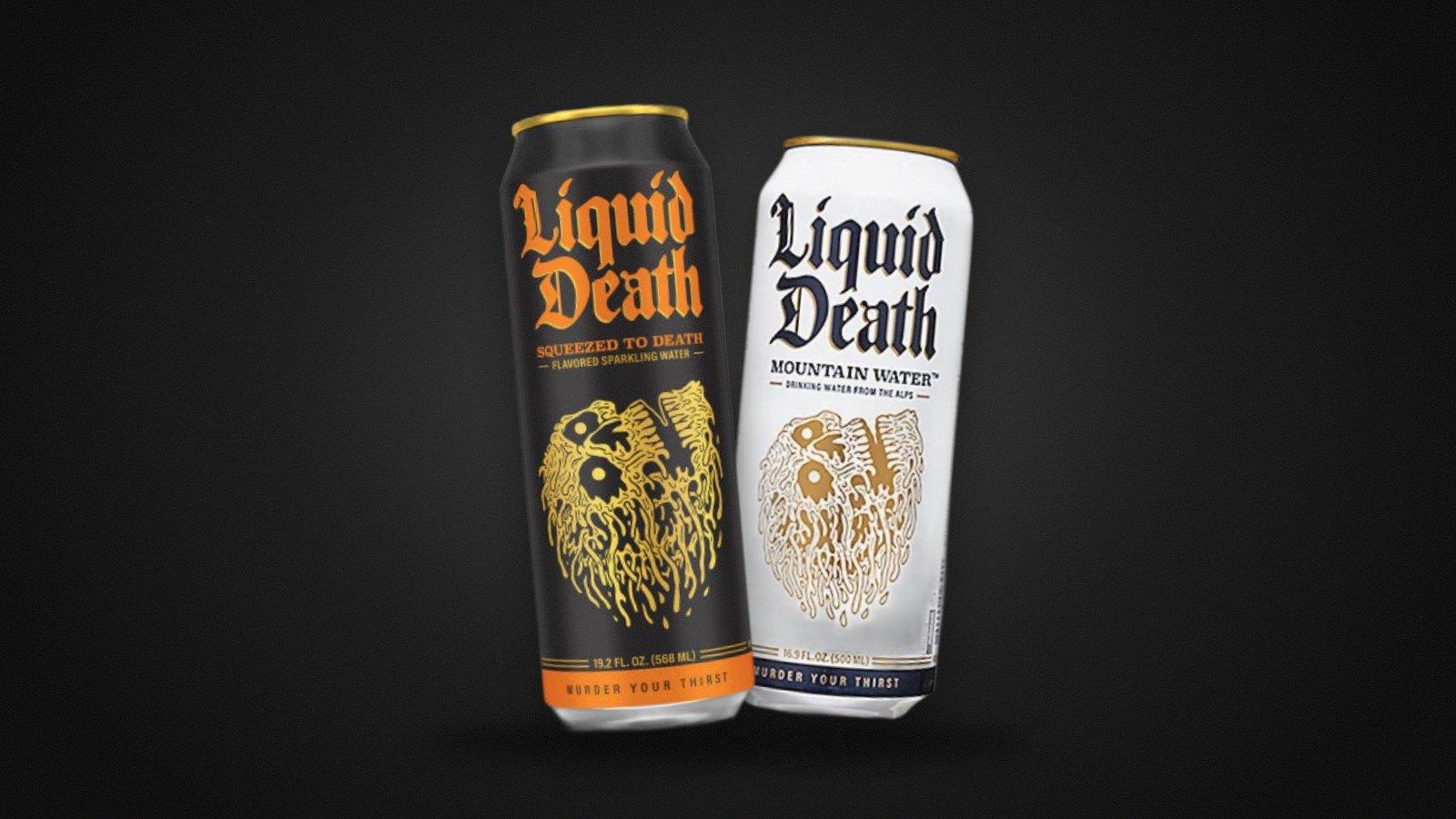
Because the can did the selling, the brand never had to claim its water was special. Adweek called "Don't be scared, it's just water" the brand's long-running tagline when Liquid Death ran its first national Super Bowl ad in 2025. The line admits the product is ordinary and makes the brand itself the reason to buy.
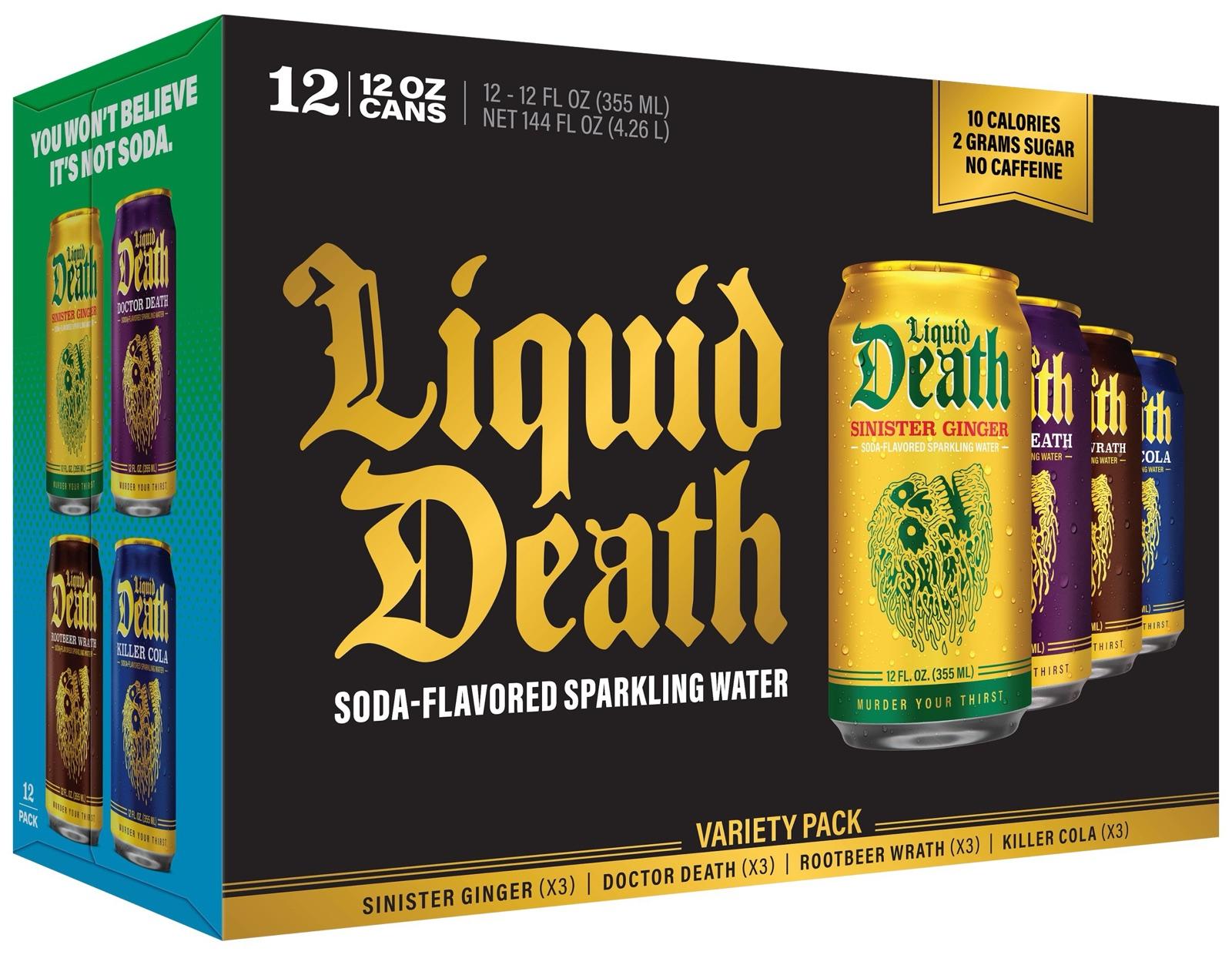
When Liquid Death does make a claim, it prints a number you can check. Its Killer Cola product page lists 10 calories and 2 grams of sugar per can and spells out the math behind "90% less sugar" than the leading non-diet soda, and the soda boxes put those numbers in a gold badge on the front. The approach has paid off: Liquid Death reached an all-time high of $333 million in retail sales in 2024, Modern Retail reported, and Fortune put its valuation at $1.4 billion in 2024.
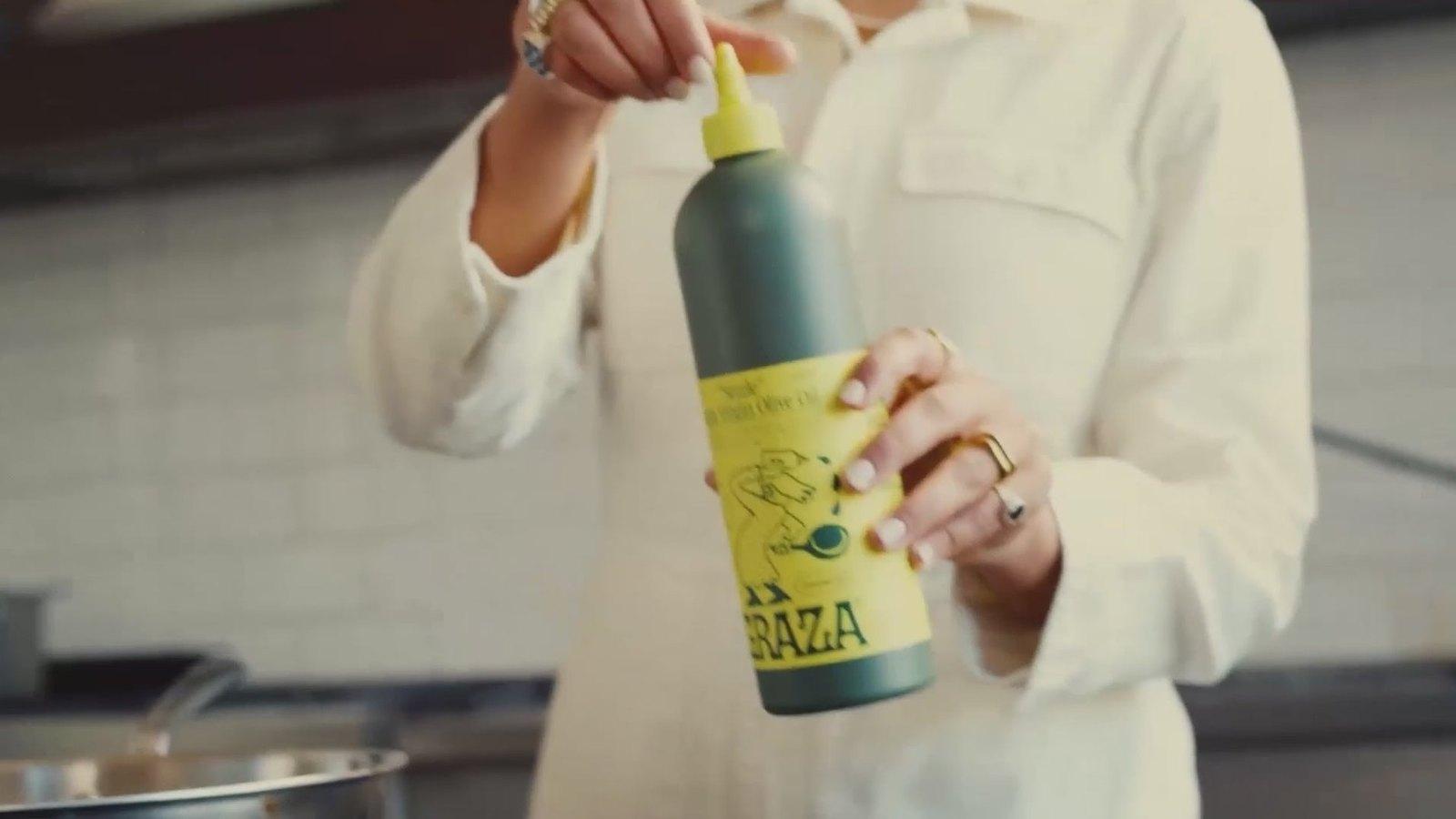
Steal this: put the personality on the package and the claims in numbers, so the fun part does the selling and the factual part never needs defending. Graza made a similar bet when it put olive oil in a squeeze bottle.
Liquid Death vs. Poppi at a glance
Side by side, the two brands differ most in the kind of claim each one makes, and that row decides what each brand has to defend later.
| Liquid Death | Poppi | |
|---|---|---|
| What it sells | Facts and a personality | A promise, now a mood |
| Tagline | "Murder your thirst" | "Soda's back, but better" |
| Kind of claim | Numbers you can check, like 10 calories | A health benefit you have to trust |
| Main channels | The can and shock-humor ads | Founder TikTok, creators, Super Bowl ads, sports deals |
| Results | $333M retail sales (2024), $1.4B valuation (2024) | $1.95B sale to PepsiCo (2025) |
| Biggest risk | Keeping the joke fresh | Proving the health claim |
Poppi is already selling what Liquid Death sells
The usual read on this matchup is that Poppi won: it sold for $1.95 billion, while Liquid Death is a joke brand that sells water. I read it the other way. Poppi's gut health promise got it onto the shelf, but the brand PepsiCo markets today looks a lot more like Liquid Death than like the Poppi of 2021.
The shift started before the sale. At the 2024 Beverage Forum, Ellsworth said most people drink Poppi for the flavor rather than for functional benefits, and suggested the brand would keep pushing that message, Brewbound reported. Its 2026 Super Bowl ad, "Make it poppi," starred Charli xcx and Rachel Sennott turning a dull lecture hall into a party, and PepsiCo's description of the ad never mentions gut health or prebiotics. Poppi posted the spot to its own TikTok on game night, captioned with little more than the word vibes.
This fall, Poppi became an official sponsor of the Dallas Cowboys, with the Dallas Cowboys Cheerleaders at the center of the deal, pouring rights at AT&T Stadium, and social content with the team, Marketing Brew reported in October 2026. SVP of marketing Kristina MacIntosh told the outlet that the brand sits "within those sidelines of culture," and named awareness and trial as goals for the deal. That is a brand selling a mood and a crowd to belong to, which is what Liquid Death has sold from the start.
So the toilet ad mocked the one thing Poppi was already backing away from. Liquid Death didn't have to change its story when the soda aisle got crowded, because its story never depended on what was in the can.
What to take from Liquid Death vs. Poppi
Poppi's run shows that a functional benefit can earn trial fast, and Liquid Death's shows what keeps working after the copycats arrive. These are the moves I'd take from the matchup.
- Say the claim as a number when you can. "10 calories, 2 grams of sugar" is something a shopper can check on the box, while "for a healthy gut" needs proof the brand has to keep defending.
- Assume an ingredient will be copied. In 2025, Coca-Cola and PepsiCo both announced prebiotic sodas of their own, so plan what will set you apart once the fiber, protein, or adaptogen is everywhere.
- Let a founder sell the first cans. Ellsworth's TikTok turned a story into Amazon orders overnight, because a real person on camera makes a new kind of product feel safe to try.
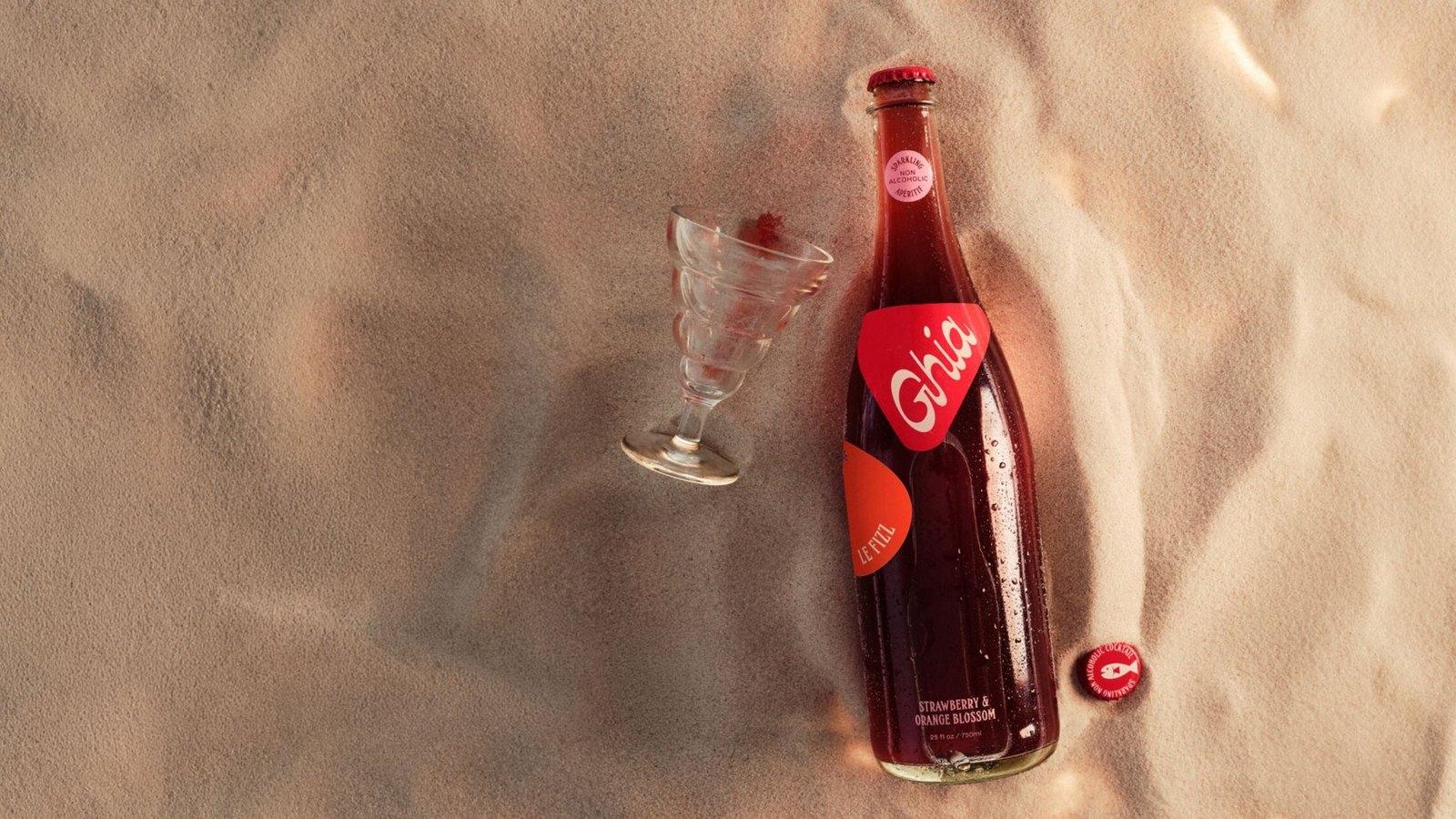
- Build the part a rival can't copy while the claim does its job. Liquid Death's voice can't be bought off a supplier list, and neither can a ritual like the one Ghia built around the hour before dinner.
- Aim a comparison ad at the rival's claim, not its taste. The toilet ad never said prebiotic soda tasted bad. It poked at the fiber, the selling point those brands shared, and it did that just as Poppi was moving away from it.
The catch: Liquid Death sells benefits too
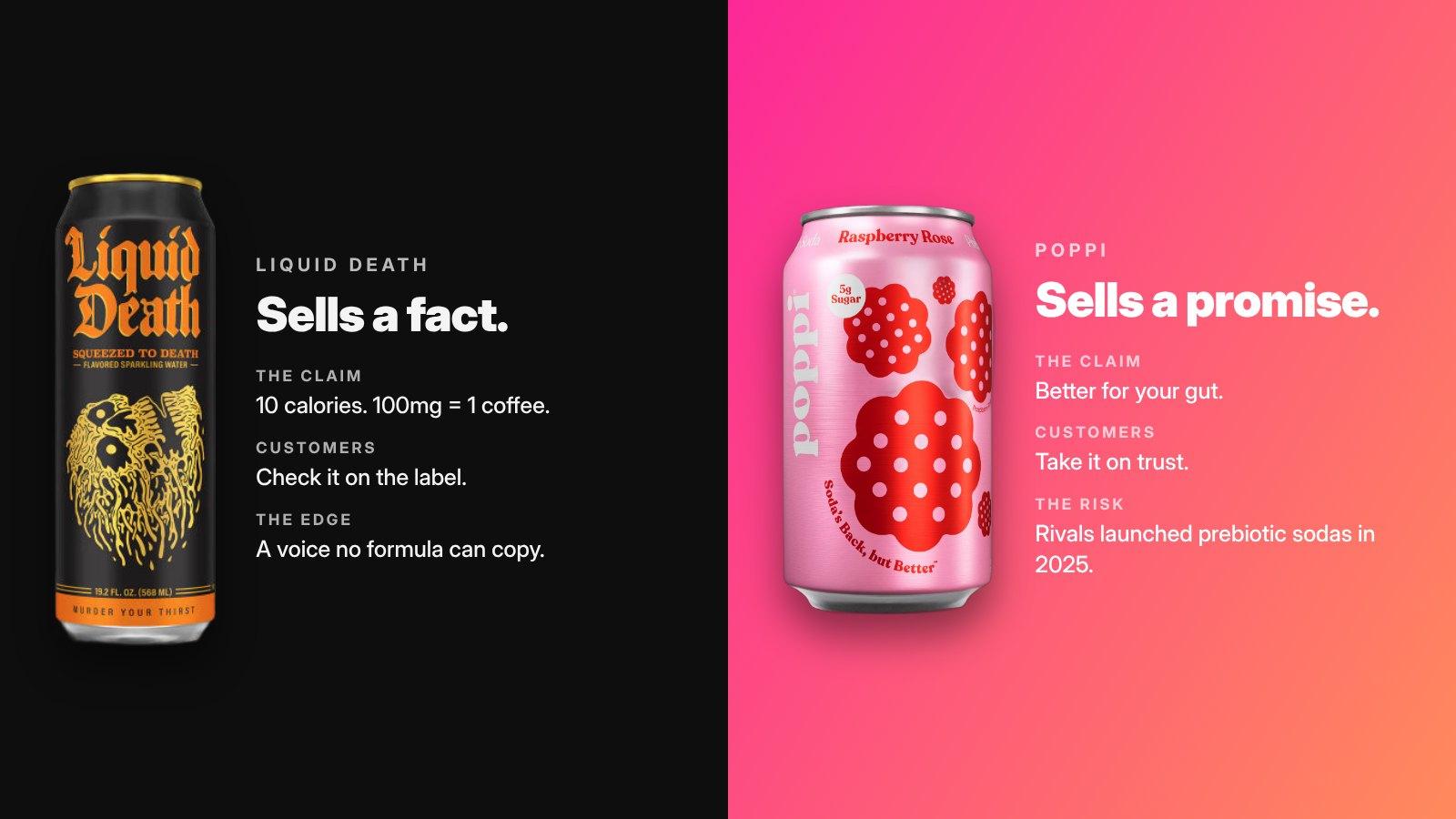
The easy takeaway from this post is that facts beat promises, so a brand should never put a benefit on the can. Liquid Death's own shelf argues against that. Its sparkling energy drink lists "Unextreme Caffeine (100mg) = 1 Coffee" along with "Boosts Metabolism," essential vitamins, and L-theanine, and says it was co-formulated by a board-certified surgeon, according to its product page. When the brand moved into an aisle where shoppers buy for what a drink does, it started printing what the drink does.
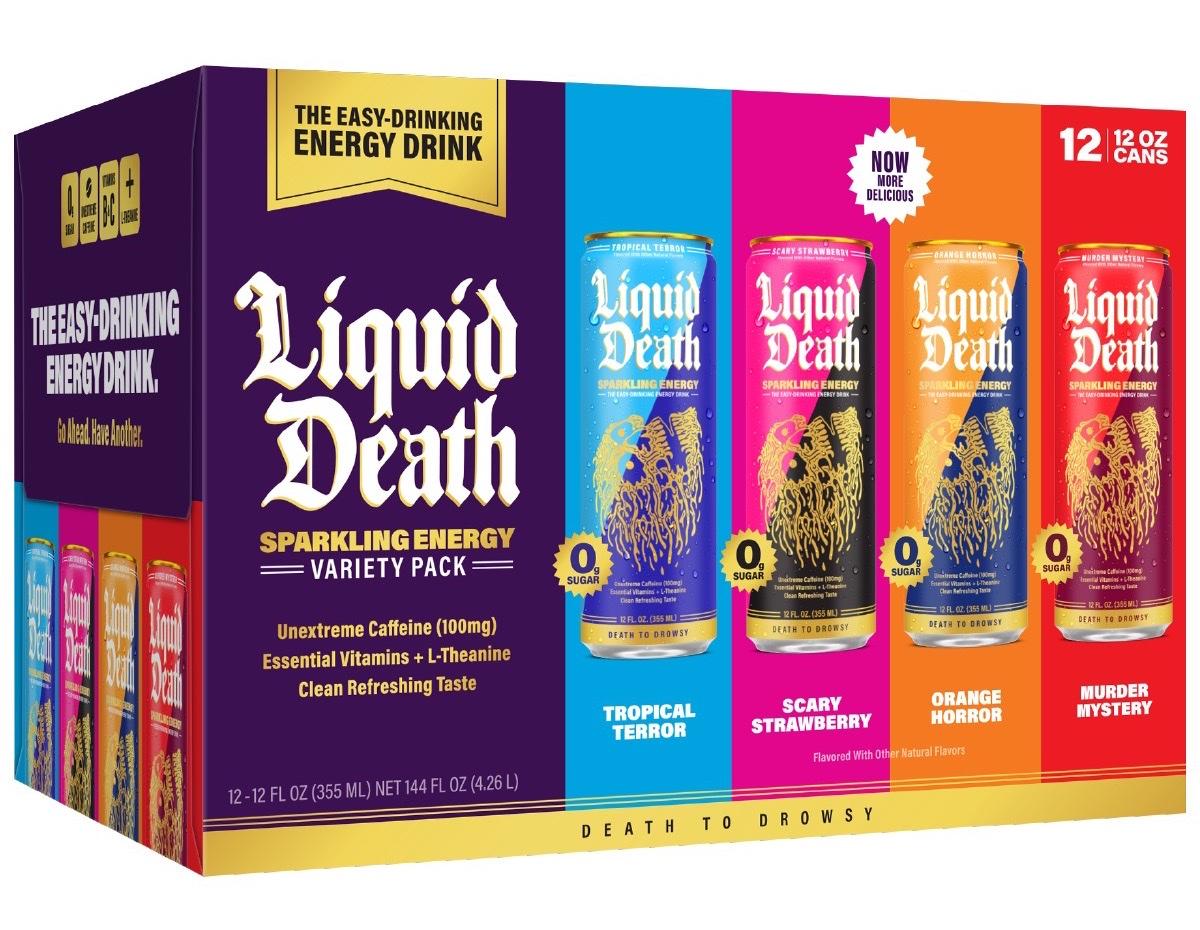
The money cuts against the easy read too. Poppi's promise built a brand PepsiCo paid $1.95 billion for, while Fortune put Liquid Death's valuation at $1.4 billion in 2024, and those aren't the same measure, but neither number says the promise was a mistake. I doubt Ellsworth's first TikTok would have sold $100,000 overnight with a line about grams of sugar. A benefit gave a new product a reason to exist in a crowded aisle, and that is hard to do with attitude alone.
So my stance is narrower than "never make a health claim." A promise is a good way to get a product tried and a weak thing to build a brand on, because it has an expiration date: the day a lawyer asks for proof or a bigger company copies the ingredient. Poppi seems to have known that, which is why it started talking about flavor in 2024 and culture in 2026. Liquid Death will face the same test with its energy line if shoppers start asking what "boosts metabolism" means.
The test I'd run next is simple: cut the benefit out of your ad and see whether people still stop scrolling. If they do, the brand can stand on its own, and the claim becomes a bonus instead of the thing you have to defend.

Written by Angel Phommachan, digital marketing specialist